When I revise vocabulary with very young students, I often use basic
arithmetic operations (such as adding, subtracting, multiplying, and
dividing numbers). I pre-teach words like: plus, minus, times and
divided by. I put 6 flashcards on the board and I number them 1-6. Then
I ask, e.g. "What is 2 + 2?". My students calculate it quietly and
instead of saying the right number they have to tell me what is in the
picture. So their answer is "crayons" not "4".
Showing posts with label Maths. Show all posts

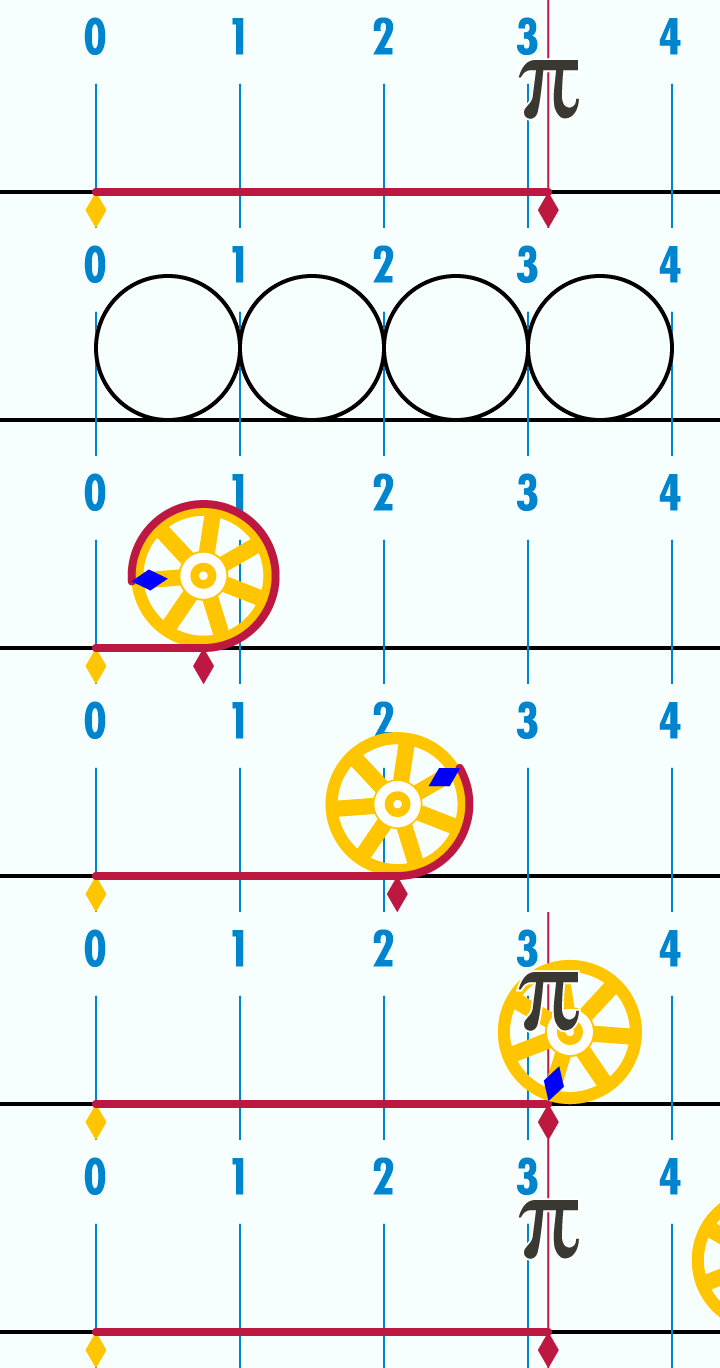
Ď€ is one of the most well-known mathematical constants. In English it is pronounced as "pie". Pi is the ratio of circle's circumference to its diameter. It's an irrational number and its decimal representation never ends. Yet we can approximate its value. Most people remember the first three digits (3.14), so it's no surprise that March 14th is celebrated as Pi Day (3/14 in the U.S. date format).
Pi Day was first organized in 1988 by Larry Shaw, an American physicist. Since then it has been celebrated annually all around the world by science enthusiasts.
If you need an animated explanation, look at this gif image from Wikimedia Commons:
Source: John Reid & Arpad Horvath, Pi-unrolled slow, http://commons.wikimedia.org, CC BY-SA 3.0
How can we celebrate Pi Day? What about a pie?
Happy Pi Day everybody!